Most Black women I know don’t announce exhaustion, we announce outcomes, we show up, we handle it, we figure it out, we keep the home running, the work moving, the family steady, the faith intact.
And somewhere along the way, something quietly shifts: People stop seeing your strength as a gift… and start treating it like a guarantee.
That’s when “strong” stops being a compliment… and becomes a cage. I’m writing this as a Black woman, as an African woman, as a wife and a mother, as a builder… and as someone who came to America on my own and learned early what it means to carry a life before you feel ready. But I’m also writing this as a daughter because the first place I ever saw generational strength up close was my mother.
My mother was strength, with a laugh, a voice, and a wide-open door. My mother is the second child of ten, same parents. She is the first daughter, seven sisters behind her, plus two brothers: the first child and the fourth. So before life even “started,” life was already calling her into leadership.
She was a nurse, during the Nigeria civil war, she was sent to Gabon. From there, she didn’t just survive, she supported. She sent food back home into Nigeria. Not only to her family, but to others too.
When people were trying to figure out how to make it through, she was already thinking:
Who needs help?
Who needs relief?
My mother didn’t just have siblings. She had responsibilities. And she didn’t just “help” raise her younger sisters, she mothered them. Especially because my grandmother was widowed young, around 53, when my grandfather passed away and left her with ten children.
That kind of loss changes a family’s shape. And in families like ours, the first daughter doesn’t just grow up she steps up.
Growing up in Lagos, I watched all seven of her younger sisters pass through our home. They came the way family comes when they feel safe. And my mother gave the way only a true giver gives fully.
They called her “Sister” (pronounced Sis-ta position. ). And it wasn’t just a nickname. It was a When her sisters visited, they packed bags. Clothes. Shoes. Food.
Whatever was available. And she let them. Not because we had excess, but because she carried a mindset: What’s mine is ours. Our home wasn’t big. Three bedrooms and one bathroom.
But it felt like a community center, family stayed, strangers stayed, friends of her children stayed. People came and ate, people came and laughed, people came and exhaled. You could smell food before you reached the door.
My mother made room, and let me tell you she didn’t make room quietly. She was charismatic. Funny. Wise. Outspoken. Fearless. She had friends everywhere.
She knew everyone. She was the kind of woman you could take anywhere and somehow she’d find her people. And let me add this because it matters: she could get angry and shout, everybody in the house knew it. But she forgave quickly. And many times, she would even be the first to make peace.
That was also her strength. She was a dancer. She loved to cook, and she cooked like a chef. Three-course meals in the 80s in Nigeria, like it was normal.
In a season when many people were managing scarcity, she served abundance. And she had a line she lived by, one she said so casually, but it shaped me: “Food should never be a problem where I am.” She traveled all over Nigeria and even outside the country.
She enjoyed her life. But here is the truth many strong women understand without needing it explained: Even joyful women can be depleted women. My mother would say she was in a loveless marriage.
And still, she gave everything for her children… and yes, even for her husband (my father). That’s what “strong” looks like from the outside. And that’s what it costs from the inside.
Then she came to America… and became everybody’s “Grandma” When I started having children here in the United States, my mother came too. She helped me raise my children for over ten years.
They didn’t go to daycare until about 2.5 years old. because we wanted them covered at home first, learning Igbo from Grandma, and then ready for social skills. And my mother made that possible. But she didn’t just help me.
She helped everybody. In America, I watched her do what she had always done: she gathered people and gave them a place to land. She helped my friends and church women bathe their newborns.
She cooked and delivered food to new moms and grieving families. She showed up with that quiet kind of care that makes you feel like you can breathe again. And everywhere she went, she earned a new name: Grandma… or Grandma General.
Not just because she had grandchildren, but because she was every child’s Grandma. She mothered children like they belonged to her.
She loved them. Watched them. Fed them. Held them. Corrected them. Prayed over them. Adults called her to mediate issues because she carried a kind of wisdom that doesn’t come from books.
It comes from life. The kind of wisdom that can calm a room without raising a voice. She was there for everyone. And if you’re reading this and you’re “the strong one,” you already know what I’m about to say.
Being the person everyone leans on can start to feel like love… until you realize you’re never the one being held. 2022 changed everything In 2022, my mother had a stroke. And she hasn’t walked since. I’m going to say this gently, but truthfully:
The strongest woman I know now sits quietly… and hardly says a word to anyone anymore. Not because she doesn’t have people. But because she has grief. This is a woman who always said she never wanted to be carried around. And now she is.
The woman who danced in the kitchen now watches the world from a wheelchair. So what happens when the woman who carried everyone becomes the one who needs carrying? This is the part we don’t romanticize.
This is the part we don’t know how to hold as a community, especially in African homes where strength is so honored that vulnerability can feel like failure. A strong woman starts asking questions she never trained for:
How can I be carried around?
How can I depend on others?
How do I accept help without feeling like I’m losing myself?
And I need to say it plainly: Sometimes “strength” becomes a cage not because we are weak… but because we were never taught how to be supported. Why Sojourner Truth keeps coming to mind When I think about the kind of strength Black women have carried across generations, I think about women like Sojourner Truth.
Not because I’m trying to compare anyone’s pain. But because her life reminds me of something many of us still live inside:
•The cost of being brave in a world that punishes truth
•The kind of strength that isn’t performative it’s necessary
•The decision to keep speaking even when silence would be safer And as an African woman who came to America on my own, I feel that connection deeply.
Because I didn’t arrive with a built-in safety net. I arrived with only $10, faith, grit, and the responsibility to build a life fast. And when you live like that long enough, “strong” stops being a season and starts becoming your identity.
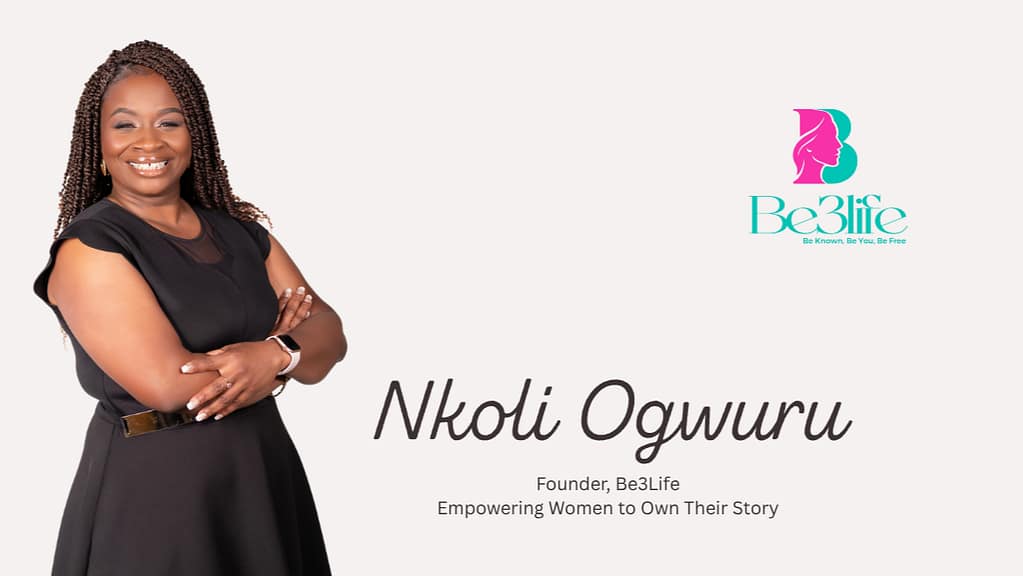
That is part of why Be3Life matters to me. This isn’t just a program, it’s a movement to help African women become bold, authentic, and free, not just outwardly successful. Free on the inside.
Whole in real life. Because I’ve seen what happens when women become so strong that they forget they’re human. And I’ve seen what happens when strength is inherited… but support is not. How you know “strong” has become silent pressure?
Let’s call it what it is. Silent pressure looks like this:
•You’re dependable… but lonely.
•You’re needed… but not nurtured.
•You’re the one everybody calls… but no one checks on.
•You don’t ask for help… but you secretly wish someone would offer.
•You keep it together publicly… and fall apart privately.
•You’re winning publicly… but privately you’re running on fumes.
•You don’t even know what you need anymore, because you’ve been meeting everyone else’s needs for so long.
And this is the part that gets me every time: Many of us don’t even realize we’re under pressure… because pressure has become our normal. What I’m learning, and what I want us to learn together, I’m not trying to stop being strong. I’m learning how to stop being strong alone and how to ask for and accept help. Because strength is beautiful… until it becomes the only version of you people are allowed to experience.
And sometimes, we participate in the cage too: We overfunction. We overgive. We overextend. We don’t speak up. We don’t rest. We don’t receive. Not because we don’t want to… but because somewhere along the way, we learned: If I don’t carry it, it might fall. If I rest, I might be judged. If I need to, I might be disappointed.
And that is not freedom. A small release practice for the strong woman Not a lecture.
Not a checklist. Just a simple practice:
1) Name what you’re carrying that isn’t yours. Not everything on your back belongs to you.
2) Tell the truth to one safe person. Not everyone deserves your vulnerability. But someone should.
3) Let support be a discipline, not a last resort. Don’t wait for a breakdown to justify help.
4) Ask yourself one honest question: Where did I learn that love must be earned by over-functioning?
Write the answer, don’t rush it, let it tell you the truth. My closing question for you If you’re a woman of faith, hear me: God never asked you to carry life alone.
If nobody praised you for being “the strong one” anymore… Who would you become? And what would you finally allow yourself to feel?
Next week, I’m going to talk about wholeness, because survival got us here, but survival is not the finish line.
And if you’re a woman who has carried generations, carried families, carried titles, carried expectations… I want you to hear this clearly, you were never meant to carry alone.