Let me finish this series with something I had to learn the hard way: Some of us don’t avoid rest because we’re lazy.
We avoid rest because we were trained to feel unsafe when we slow down… and guilty when we receive.
As Black women, especially those of us raised in “strong woman” culture, this runs deep. We were taught to endure, handle it, figure it out, and never need “too much.”
But wholeness speaks a different language: RECEIVE.
My honest backstory: I didn’t like being told “no”
Let me tell you something about younger me: I hated being told no. Even as a child. So I developed a strategy early:
Don’t ask.
Because when you don’t ask, you can’t be denied. You don’t have to feel that sting, the one that makes you feel small.
I grew up fiercely self-sufficient. Not the cute independence people clap for… but the kind that quietly whispers: “I’ll just do it myself.” It concerned my mother then, and that habit followed me straight into adulthood.
Then perfectionism gave my independence a whole new personality
I’m a perfectionist. (And yes… I’m still in recovery.)
If you are one too, you already know the script:
- “I can’t delegate because they won’t do it the way I want.”
- “It’s faster if I just do it myself.”
- “I don’t even want to explain it.”
So I did everything. Not because I was indispensable—but because control felt safer than disappointment.
Perfectionism has a way of disguising itself as excellence… while it silently drains your life.
Busy became my comfort zone
Let me expose myself a little more.
I used to like being busy. Multi-tasking. Creating. Fixing. Organizing.
I remember my husband once said something that irritated me simply because it was true
“You will create things to keep you busy instead of just going to bed.”
Whew.
I had a belief system that sounds ridiculous now, but felt normal then:
- Going to bed early wasn’t “good.”
- Sleeping more than five hours was for “lazy people.”
- Resting meant I wasn’t serious.
- Slowing down meant I was falling behind.
So I stayed up. Not always because I had to… sometimes because I didn’t know how to stop. And the wild part? Even when I sat down, I felt guilty.
My body was on the couch… but my mind was still standing at attention.
Receiving help felt like a trap
This is a big one.
I used to believe that if someone helped me, I was signing an unspoken contract. I didn’t see it as gratitude. I saw it as a mandate—help with invisible strings:
- Now I owe you.
- Now I’m obligated.
- Now you can call on me anytime.
- Now I can’t say no.
So I avoided receiving—not because I didn’t need help, but because I didn’t want to feel trapped.
I would rather struggle quietly or “manage” until I broke… than feel controlled by a debt of kindness.
What Black History Month makes me think about
Our history is full of women (and men) who did not have the luxury of rest.
They carried families through systems designed to break them—not protect them.
They worked, built, served, prayed, and endured—often with no support and zero softness. We honor that resilience. But we also have to tell the truth:
What kept us alive is not always what will keep us well.
Survival patterns can become generational traditions. And when we start calling exhaustion “strength” and burnout “purpose,” we forget we’re human.
Language for the struggle: Apostle Joshua Selman
Apostle Joshua Selman’s teaching on receiving vs. having helped me put language to this.
He teaches that many people believe God for a blessing—but don’t actually “have” it because they don’t know how to receive.
That hit me as both a spiritual and emotional mirror.
Many of us pray for relief while rejecting the very channels God uses to bring it: people, systems, support, community.
We keep praying for the “miracle”… while refusing the “help.”
So what does receiving actually look like? Receiving is not passive. It’s a skill. It’s a posture. And here’s the hardest part for the perfectionist in me:
Receiving means letting someone do it differently… and actually letting it stay that way. No correcting. No controlling. No redoing.
(Yes, this one was my final boss. But I’ve grown so much—and my peace of mind is the proof. Trust me: the world didn’t fall apart because the towels weren’t folded my way.)
A Permission to Receive Practice
If you want something practical this week, try this:
- The Small Ask
Ask for something small. “Can you handle this tonight?” “Can you pick up the kids?”
- The “Period” Response
When someone offers help, say: “Yes. Thank you.”
No paragraph. No guilt speech.
- Rest Without a Receipt
Pick one hour. Rest because you are human, not because you earned it by finishing your to-do list.
- Break the “Strings” Story
Not all help is manipulation. Healthy people give with clean hands. Not all support is a trap.
Reflection
If you didn’t feel guilty for resting… what would you finally allow yourself to do? If receiving didn’t feel like a debt… what support would you accept?
And if you didn’t have to be “the strong one” anymore… who would you become?
Black History Month honors what we survived… but it also invites us to heal from what survival taught us.
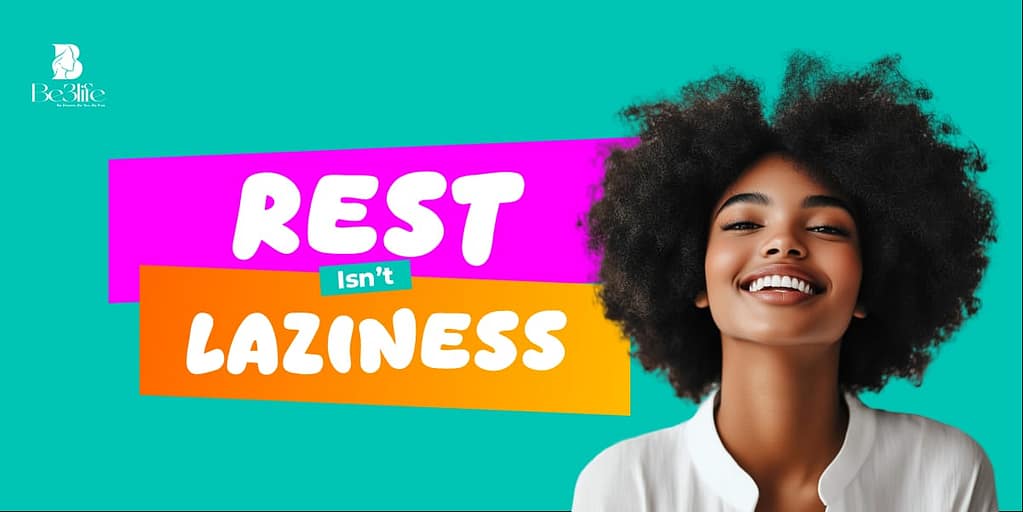
So please remember this: Rest isn’t laziness. It’s leadership. It’s maturity. It’s wholeness.
And learning to receive, without guilt, without fear, without strings, might be one of the most freeing things you do this year.
You were never meant to carry alone.
Rest Isn’t Laziness: Black Women and the Permission to Receive
Let me finish this series with something I had to learn the hard way: Some of us don’t avoid rest because we’re lazy.
We avoid rest because we were trained to feel unsafe when we slow down… and guilty when we receive.
As Black women, especially those of us raised in “strong woman” culture, this runs deep. We were taught to endure, handle it, figure it out, and never need “too much.”
But wholeness speaks a different language: RECEIVE.
My honest backstory: I didn’t like being told “no”
Let me tell you something about younger me: I hated being told no. Even as a child. So I developed a strategy early:
Don’t ask.
Because when you don’t ask, you can’t be denied. You don’t have to feel that sting, the one that makes you feel small.
I grew up fiercely self-sufficient. Not the cute independence people clap for… but the kind that quietly whispers: “I’ll just do it myself.” It concerned my mother then, and that habit followed me straight into adulthood.
Then perfectionism gave my independence a whole new personality
I’m a perfectionist. (And yes… I’m still in recovery.)
If you are one too, you already know the script:
- “I can’t delegate because they won’t do it the way I want.”
- “It’s faster if I just do it myself.”
- “I don’t even want to explain it.”
So I did everything. Not because I was indispensable—but because control felt safer than disappointment.
Perfectionism has a way of disguising itself as excellence… while it silently drains your life.
Busy became my comfort zone
Let me expose myself a little more.
I used to like being busy. Multi-tasking. Creating. Fixing. Organizing.
I remember my husband once said something that irritated me simply because it was true
“You will create things to keep you busy instead of just going to bed.”
Whew.
I had a belief system that sounds ridiculous now, but felt normal then:
- Going to bed early wasn’t “good.”
- Sleeping more than five hours was for “lazy people.”
- Resting meant I wasn’t serious.
- Slowing down meant I was falling behind.
So I stayed up. Not always because I had to… sometimes because I didn’t know how to stop. And the wild part? Even when I sat down, I felt guilty.
My body was on the couch… but my mind was still standing at attention.
Receiving help felt like a trap
This is a big one.
I used to believe that if someone helped me, I was signing an unspoken contract. I didn’t see it as gratitude. I saw it as a mandate—help with invisible strings:
- Now I owe you.
- Now I’m obligated.
- Now you can call on me anytime.
- Now I can’t say no.
So I avoided receiving—not because I didn’t need help, but because I didn’t want to feel trapped.
I would rather struggle quietly or “manage” until I broke… than feel controlled by a debt of kindness.
What Black History Month makes me think about
Our history is full of women (and men) who did not have the luxury of rest.
They carried families through systems designed to break them—not protect them.
They worked, built, served, prayed, and endured—often with no support and zero softness. We honor that resilience. But we also have to tell the truth:
What kept us alive is not always what will keep us well.
Survival patterns can become generational traditions. And when we start calling exhaustion “strength” and burnout “purpose,” we forget we’re human.
Language for the struggle: Apostle Joshua Selman
Apostle Joshua Selman’s teaching on receiving vs. having helped me put language to this.
He teaches that many people believe God for a blessing—but don’t actually “have” it because they don’t know how to receive.
That hit me as both a spiritual and emotional mirror.
Many of us pray for relief while rejecting the very channels God uses to bring it: people, systems, support, community.
We keep praying for the “miracle”… while refusing the “help.”
So what does receiving actually look like? Receiving is not passive. It’s a skill. It’s a posture. And here’s the hardest part for the perfectionist in me:
Receiving means letting someone do it differently… and actually letting it stay that way. No correcting. No controlling. No redoing.
(Yes, this one was my final boss. But I’ve grown so much—and my peace of mind is the proof. Trust me: the world didn’t fall apart because the towels weren’t folded my way.)
A Permission to Receive Practice
If you want something practical this week, try this:
- The Small Ask
Ask for something small. “Can you handle this tonight?” “Can you pick up the kids?”
- The “Period” Response
When someone offers help, say: “Yes. Thank you.”
No paragraph. No guilt speech.
- Rest Without a Receipt
Pick one hour. Rest because you are human, not because you earned it by finishing your to-do list.
- Break the “Strings” Story
Not all help is manipulation. Healthy people give with clean hands. Not all support is a trap.
Reflection
If you didn’t feel guilty for resting… what would you finally allow yourself to do? If receiving didn’t feel like a debt… what support would you accept?
And if you didn’t have to be “the strong one” anymore… who would you become?
Black History Month honors what we survived… but it also invites us to heal from what survival taught us.
So please remember this: Rest isn’t laziness. It’s leadership and embracing youself.
And learning to receive, without guilt, without fear, without strings, might be one of the most freeing things you do this year.
You were never meant to carry alone.
Connect with me:
https://www.linkedin.com/in/nkoliogwuru/